

What exactly is a "Mug Theory"?
An object taking up space in your life should justify that space by doing more than one thing.
Elegantly. Repeatedly. Without compromise.
The Observation
Pour-over coffee traditionally requires four objects: dripper, carafe, drinking vessel, coaster.
Our Dripper Mug collapses that equation. The mug holds your coffee. Its lid inverts to brew it. When you're done, the lid becomes your coaster.
One object. Three functions. Each performed as well as if it were the only function.
That's not a design trick. It's architecture applied to tableware.
Multi-Utility vs. Multipurpose
We're not making Swiss Army knives.
We're asking: What if we designed this to serve three specific functions, and designed it so well that it performs each function better than most single-purpose objects?
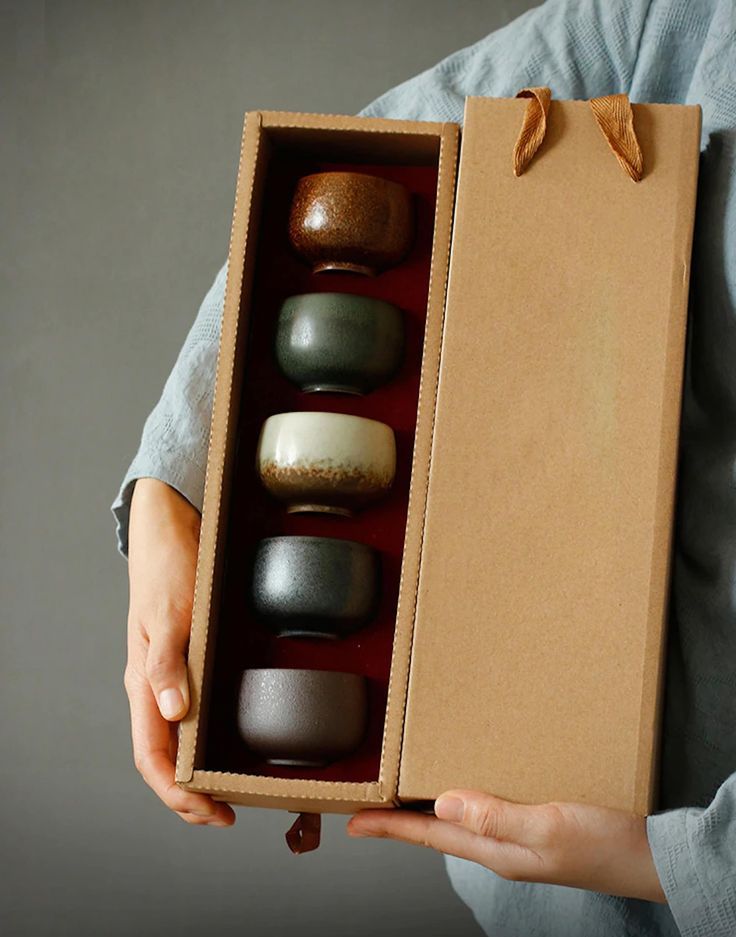
The Japandi 5-Candle Set holds tea lights when you need ambiance. When the candles burn out, they're your drink coasters. When you're done hosting, they stack flat for storage.
At every stage, the form makes sense. That's the standard.
Form Follows All Functions
When we designed the Conical Stack Mug, we weren't solving for one problem.
We were solving for comfortable grip at multiple angles. For nesting geometry that saves cabinet space. For portion control through visual taper. For aesthetic rhythm when six are stacked on a shelf.
Fourteen iterations later, we had something that did all of it. That's why we move slowly.
The Sustainability We Don't Mention
If one object does what three objects used to do:
- Manufacturing decreases by two-thirds
- Shipping consolidates
- Cabinet space opens up
- You own less, use more
We don't need to talk about sustainability. The design is the sustainability.
Why It Matters
Because restraint clarifies. Most brands accumulate products the way people accumulate belongings—gradually, then suddenly it's clutter.
We spent two years meticulously designing our collection. Each serves a distinct ritual.
We'll expand. Slowly. When the design earns it.
Who This Is For
People who notice materials. People who understand that good design usually looks quiet, and almost always gets better with age.
People who'd rather own exceptional things than acceptable ones.
Design as Constraint
We're building a harder business model on purpose. If one mug does the work of three, you buy fewer mugs. If it lasts decades, you replace it never.
That means every product has to be worth keeping. But it also means when you buy from us, you're buying from people who designed the object to be useful first, not simply to be sold.